

Sports Betting Guides
Paripesa Bet Insurance: How It Works and What You Need to Know
A detailed guide to Paripesa's bet insurance feature, costs, and practical usage for sports bettors.

Sports Betting Analyst & Football Predictions Expert
Brian Otieno is a Kenyan sports betting analyst with over 10 years of experience in football predictions, match analysis, and betting strategies. He specializes in European football leagues, statistical analysis, odds comparison, and identifying value betting opportunities. His approach combines data-driven insights, team performance research, and disciplined bankroll management to help sports enthusiasts make more informed betting decisions.
Paripesa offers a bet insurance feature that lets you protect part or all of your stake on a wager. If the bet loses, the insured portion gets refunded to your account. The concept is straightforward, but the details around pricing, eligible markets, and payout calculations matter if you want to use it effectively.
Contents
- 1. What Is Paripesa Bet Insurance
- 2. How Bet Insurance Works on Paripesa
- 3. Eligible Bet Types and Markets
- 4. Insurance Cost and Payout Calculation
- 5. Activating Bet Insurance on Your Bet Slip
- 6. Paripesa Bet Insurance vs Cash Out
- 7. Accumulator Insurance vs Single Bet Insurance
- 8. Terms and Conditions to Watch
- 9. Practical Examples of Bet Insurance in Action
- 10. When Bet Insurance Makes Sense
- 11. Limitations and Drawbacks
- 12. Bet Insurance on Mobile App
- 13. Managing Insurance Costs Over Time
- 14. Common Misconceptions
- 15. Final Assessment of Paripesa Bet Insurance
This guide walks through how the feature works on Paripesa, what it costs, which bets qualify, and how it compares to the cash out option. You will also find practical examples, limitations to watch for, and a FAQ section addressing common questions.
What Is Paripesa Bet Insurance
Bet insurance on Paripesa is an optional add-on you can purchase when placing a bet. You choose the percentage of your stake to insure, from 10% up to 100%. The insurance premium is deducted from your account balance at the moment you confirm the bet. If the bet wins, the premium is not refunded. If the bet loses, the insured portion of your stake returns as cash, not bonus funds.
The feature sits on the bet slip alongside the cash out button. It is available for both pre-match and live bets, though the premium price changes as odds shift during a match. Insurance cannot be added after a bet is placed, and it cannot be cancelled once purchased.
How Bet Insurance Works on Paripesa
When you add a selection to your bet slip, an insurance icon appears if the market is eligible. Clicking it opens a slider where you set the coverage percentage. The premium updates in real time as you adjust the slider. The premium depends on the current odds, the coverage percentage, and the stake amount. Higher odds mean a higher premium for the same coverage level.
After you confirm the bet, the premium is locked in. The insured amount shows on your bet history with a small shield icon. If the bet settles as a loss, the insured portion credits to your main balance automatically, usually within a few minutes of settlement. No manual claim is required.
- Select your market and add it to the bet slip
- Click the insurance icon on the bet slip
- Choose coverage percentage from 10% to 100%
- Review the premium cost displayed
- Confirm the bet — premium deducts immediately
- Wait for settlement; insured stake refunds on a loss
Eligible Bet Types and Markets
Not every market supports bet insurance. Paripesa generally enables it for standard match result markets (1X2), double chance, both teams to score, over/under goals, and most major league football markets. Tennis match winner, basketball moneyline, and ice hockey regulation time markets are also commonly covered.
Exotic markets like correct score, first goalscorer, half-time/full-time combinations, and most player props do not offer insurance. Accumulator bets can be insured, but only if every leg in the accumulator comes from an eligible market. If one leg is from an ineligible market, the insurance option disappears for the entire bet slip.
Scroll horizontally to see all columns
| Market Type | Insurance Available | Notes |
|---|---|---|
| Match Result (1X2) | Yes | All major sports |
| Double Chance | Yes | Football, hockey |
| Both Teams to Score | Yes | Football only |
| Over/Under Goals | Yes | Football, hockey |
| Correct Score | No | Exotic market |
| First Goalscorer | No | Player prop |
| Accumulator (all eligible legs) | Yes | All legs must qualify |
| Accumulator (any ineligible leg) | No | Option hidden |
Insurance Cost and Payout Calculation
The premium is not a flat fee. Paripesa calculates it using the implied probability of the selection losing, adjusted by the coverage percentage and a house margin. In practice, insuring a heavy favorite at low odds costs very little. Insuring an underdog at high odds can cost a significant chunk of the potential profit.
For example, a $100 bet on a team at 1.50 odds with 100% coverage might carry a premium around $8 to $12. The same stake on a 3.00 underdog with full coverage could cost $25 to $35. The premium is always shown before you confirm, so you can decide whether the protection is worth the cost.
Scroll horizontally to see all columns
| Odds | Stake | Coverage | Estimated Premium |
|---|---|---|---|
| 1.50 | $100 | 100% | $8–$12 |
| 1.50 | $100 | 50% | $4–$6 |
| 2.00 | $100 | 100% | $15–$20 |
| 3.00 | $100 | 100% | $25–$35 |
| 5.00 | $100 | 100% | $40–$55 |
Activating Bet Insurance on Your Bet Slip
The activation flow is simple but easy to miss if you are not looking for it. After adding selections, the insurance icon appears on the right side of the bet slip, next to the stake input. On mobile, it sits under the stake field. Tap or click it, adjust the slider, and the premium updates instantly. The total cost (stake + premium) shows at the bottom.
One detail that catches some users: the premium comes from your main balance, not from the stake amount. If you have $100 in your account and place a $50 bet with a $10 premium, your balance drops by $60. The bet slip still shows a $50 stake. This matters for bankroll tracking.
- Log in and navigate to your chosen sport
- Add at least one eligible selection to the bet slip
- Locate the shield icon on the bet slip
- Open the insurance slider and set coverage
- Verify the premium and total deduction
- Click Place Bet to confirm both stake and premium
Paripesa Bet Insurance vs Cash Out
Cash out and bet insurance solve similar problems but work differently. Cash out lets you settle a bet early at a value determined by current odds. You can take a profit or cut a loss before the event finishes. Bet insurance only pays if the bet loses, and only the insured portion. You cannot 'cash out' the insurance itself.
Cash out is dynamic — the offer changes every few seconds during a live match. Insurance premium is fixed at bet placement. If you want flexibility to exit a position early, cash out is the tool. If you want guaranteed downside protection without watching the match, insurance is simpler.
Scroll horizontally to see all columns
| Feature | Bet Insurance | Cash Out |
|---|---|---|
| When decided | At bet placement | Any time during event |
| Cost | Fixed premium upfront | Implied in offer value |
| Payout trigger | Bet loses | User accepts offer |
| Partial coverage | Yes, 10–100% | Yes, partial cash out |
| Available on accumulators | If all legs eligible | Usually yes |
| Requires monitoring | No | Yes, for best value |
Accumulator Insurance vs Single Bet Insurance
Paripesa also runs a separate accumulator insurance promotion that refunds your stake as a free bet if one leg lets you down. That is different from the bet insurance feature described here. The promotional accumulator insurance usually requires a minimum number of legs (often 5 or more) and minimum odds per leg. It is a bonus offer, not a purchasable feature.
The bet insurance feature works on accumulators of any size, provided every leg is from an eligible market. You pay the premium for the whole accumulator. If the acca loses, the insured percentage of your total stake returns as cash. This can be more valuable than the promotional version because it pays cash, not a free bet with wagering requirements.
Terms and Conditions to Watch
The terms page for bet insurance is not always easy to find. It sits under the general sports betting rules, not the promotions section. Key points include: insurance cannot be combined with certain bonus offers, voided selections in an accumulator reduce the insured stake proportionally, and the maximum insurable stake may be capped per bet or per day.
Also, if a match is postponed or cancelled, the insurance premium is not refunded. The bet becomes void, and your stake returns, but the premium stays with the house. This is standard across most bookmakers but worth knowing before you insure a bet on a competition with weather risks.
- Premium not refunded on voided or cancelled events
- Maximum insurable stake may be capped
- Cannot combine with some bonus funds
- Voided legs reduce insured amount proportionally
- Insurance unavailable on bonus-funded bets
- One insurance purchase per bet slip
Practical Examples of Bet Insurance in Action
Say you back Manchester City at 1.40 to beat a mid-table side. You stake $200 and insure 100% for a $12 premium. City wins — you collect $280 gross, minus the $200 stake and $12 premium, leaving $68 profit. Without insurance, profit would be $80. The insurance cost you $12 of potential profit for peace of mind.
Now imagine the same bet but City draws. Without insurance, you lose $200. With 100% insurance, you get $200 back. Net result: you are down $12 (the premium) instead of $200. That is the trade-off — a small guaranteed cost to eliminate a large potential loss.
A third scenario: a 4-leg accumulator at combined odds of 8.50. You stake $50 and insure 50% for a $9 premium. Three legs win, the fourth loses. The bet loses. You receive $25 back (50% of $50). Your net loss is $34 ($50 stake + $9 premium - $25 refund). Without insurance, you would lose $59.

When Bet Insurance Makes Sense
Insurance makes the most sense when the potential loss would hurt your bankroll more than the premium hurts your expected value. Recreational bettors protecting a weekend accumulator, or anyone placing a larger-than-usual stake on a single match, are the typical users. Sharp bettors rarely use it because the premium embeds a margin that reduces long-term ROI.
It also makes sense when you have a strong read on a match but acknowledge a specific risk — a key player injury doubt, bad weather, or a team known for late collapses. In those cases, 50% to 70% coverage can be a reasonable compromise between cost and protection.
Insurance is a bankroll management tool, not a profit generator. Use it when the cost of being wrong exceeds the cost of the premium.
Limitations and Drawbacks
The main drawback is the premium margin. Paripesa prices insurance above the fair mathematical cost. Over hundreds of bets, that margin compounds. If you insure every bet, you are effectively paying a second vig on top of the odds margin. For volume bettors, this erodes profitability significantly.
Another limitation: insurance is not available on all markets, and the eligible market list changes without notice. You might plan a bet around insurance only to find the icon missing. Live betting insurance premiums can spike sharply after a goal or red card, sometimes making the feature too expensive to justify.
Finally, the psychological effect can be negative. Some bettors take worse positions because they feel protected, or they insure bets they should simply skip. Insurance does not turn a bad bet into a good one.
Bet Insurance on Mobile App
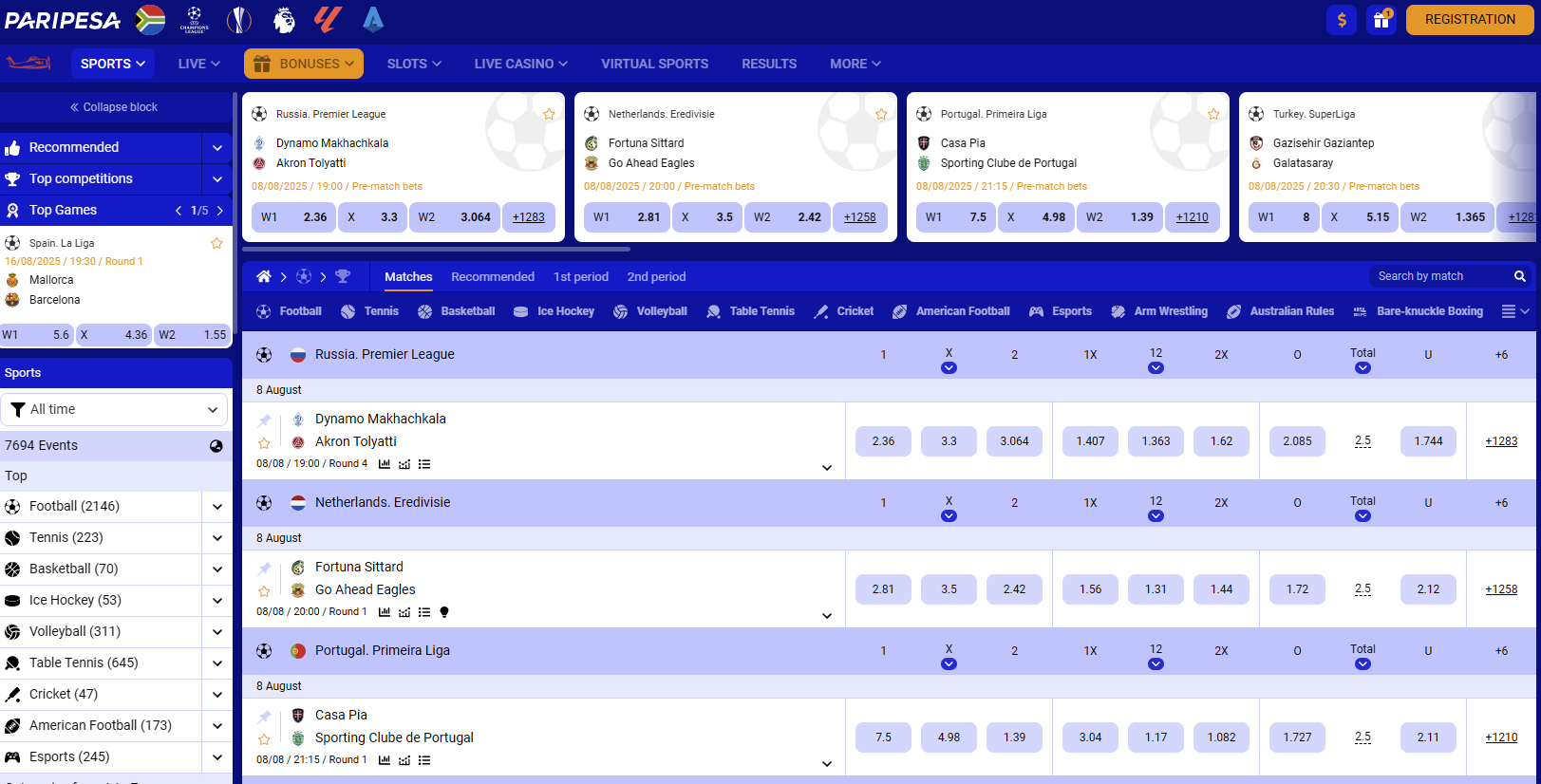
The Paripesa mobile app includes the full insurance feature. The bet slip layout is slightly condensed, but the shield icon and slider work the same way. On smaller screens, the premium display sits under the stake input rather than beside it. The app also supports push notifications for bet settlement, so you know immediately when an insured bet loses and the refund lands.
One mobile-specific quirk: if you use the one-click bet feature, insurance is not available. One-click bypasses the full bet slip, so you cannot adjust the slider. You must use the standard bet slip flow to add insurance. This is a deliberate design choice to keep one-click truly instant.

Managing Insurance Costs Over Time
If you use insurance regularly, track the total premiums paid versus refunds received. A simple spreadsheet with columns for date, stake, premium, coverage, outcome, and refund lets you see the real cost. Many bettors discover they pay far more in premiums than they ever recover, especially on low-odds favorites where the loss frequency is low but the premium still applies every time.
Consider setting a personal rule: only insure bets above a certain stake threshold, or only when the odds exceed a certain level. This prevents the habit of insuring every $10 bet at 1.30 odds, where the premium is tiny but the cumulative drag is real.
Common Misconceptions
Some users think insurance guarantees profit. It does not. It only reduces loss. Others believe the premium is refunded if the bet wins. It is not. The premium is the price of the option, like an option contract in finance — you pay for the right, not the outcome.
Another misconception: that insurance works on bonus funds. It generally does not. If you place a bet using bonus money, the insurance icon often disappears. Check the bonus terms; most Paripesa sports bonuses exclude insurance purchases.
Finally, some expect insurance to cover voided legs in an accumulator at the original percentage. It does not. If a 5-leg acca has one voided leg, the insured stake recalculates based on the remaining four legs. The premium already paid does not adjust.
Frequently Asked Questions
Can I add insurance after placing a bet?
No. Insurance must be purchased at the moment you place the bet. It cannot be added later.
Is the insurance premium refunded if my bet wins?
No. The premium is the cost of the protection and is not returned regardless of the outcome.
Does bet insurance work on live bets?
Yes, for eligible live markets. The premium updates in real time as odds change during the match.
Can I insure a bet placed with bonus funds?
Usually not. Most Paripesa bonus terms exclude insurance purchases on bonus-funded bets.
What happens if a match is cancelled after I bought insurance?
The bet is void and your stake returns, but the insurance premium is not refunded.
Is there a maximum amount I can insure?
Paripesa may cap the maximum insurable stake per bet or per day. Limits are not published openly and can vary by market.
How is the refund paid if my insured bet loses?
The insured portion credits to your main balance as cash, typically within minutes of settlement. No wagering requirements apply.
Can I insure only part of an accumulator?
You insure the entire accumulator stake at a chosen percentage. You cannot insure individual legs separately.
Final Assessment of Paripesa Bet Insurance
Paripesa bet insurance is a functional, transparent feature that does what it says. The interface is clear, the pricing is shown upfront, and refunds process automatically. For bettors who occasionally want downside protection on a specific wager — a large stake, a nervous accumulator, a match with a known risk factor — it is a reasonable tool. The premium margin means it is not mathematically optimal for frequent use, but that is true of almost every bookmaker insurance product. Use it selectively, track your costs, and do not let it encourage bets you would otherwise avoid.